
The site is controlled.
The plan still has to be right.
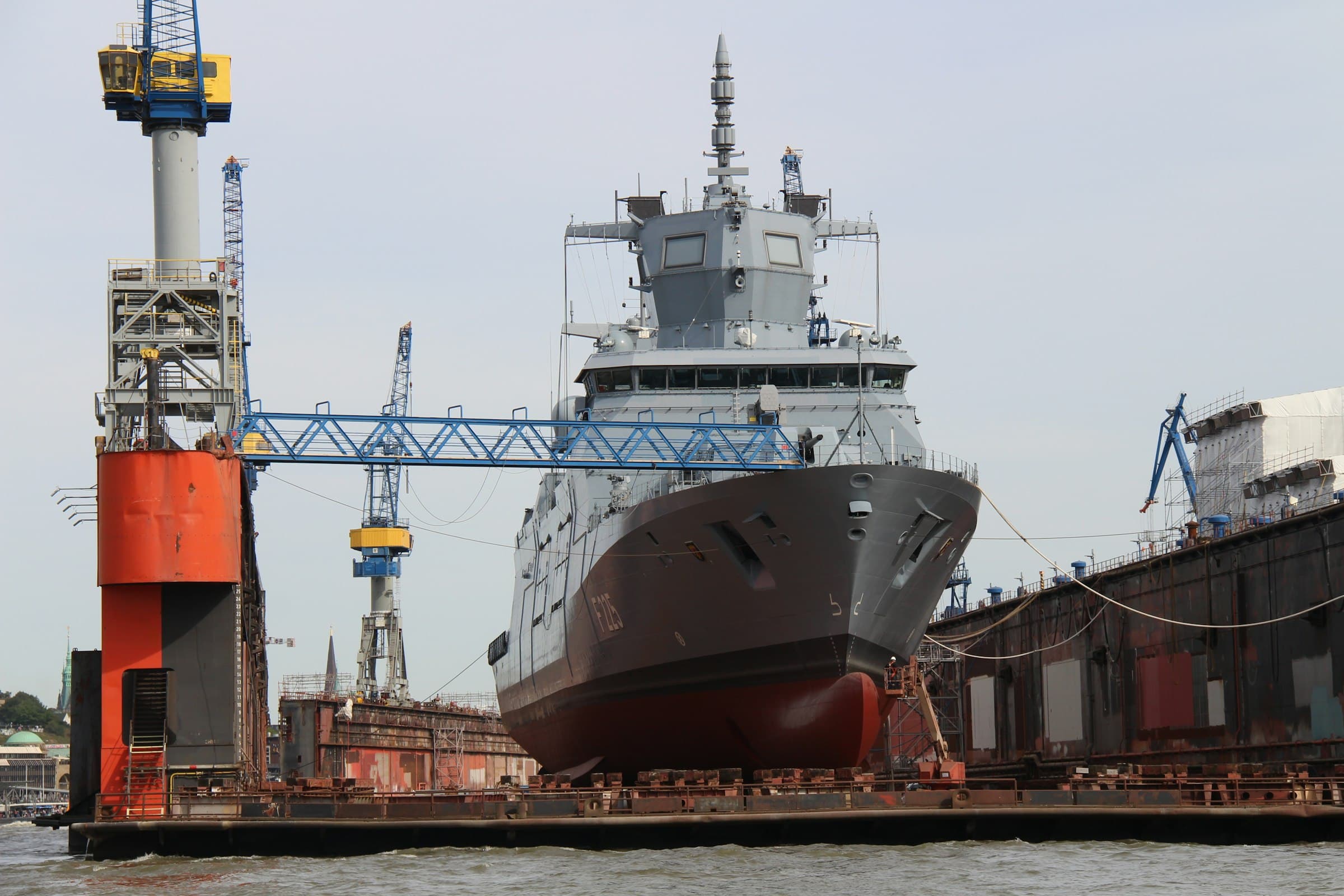
Defence work adds a layer civil work doesn't have : access is controlled, schedules answer to a fleet posture rather than a construction calendar, and the paperwork outlives the project. Underneath that layer it is still heavy lifting — a frigate module into a dry dock, a radar mast onto a headland, a transformer into a base substation. We engineer that lift, sealed before mobilization. We do not touch the weapon system, the munition, or the technical data package : that belongs to the prime and its cleared chain.
24 h
Emergency lift plans — Canadian sites
Sealed
Every deliverable, by a licensed Canadian PE
Sovereign
Software hosted in Canada, no CLOUD Act exposure
0
Scope creep into controlled technical data
Six exposures a defence lift plan has to answer.
On a defence site the cost of a bad lift is rarely just the crane. It is a berth that stays occupied, a capability that stays offline, and a file that follows the prime into the next procurement. The six below are the ones that show up on every defence project's risk register.
Fleet availability, not project schedule
A refit slips and a hull stays alongside instead of at sea. The cost is measured in capability days, not dollars per shift — and the schedule pressure that creates is exactly what makes people improvise around a lift plan.
Controlled site access
Crews, crane operators and engineers on a defence site are screened, escorted, and time-boxed. A plan that assumes a second site visit or a same-day crew swap is a plan that will not execute. Engineering has to be right on the first mobilization.
Controlled goods and technical data
The moment a lift plan describes the item rather than the load path, it risks pulling controlled technical data into an uncontrolled document. Our deliverables describe mass, geometry, centre of gravity and rigging — never the system. That boundary is drawn in writing at G2 Scope.
Marine and dry-dock conditions
Tide, list, dock-block reaction, a hull that moves as it is loaded. A module lift into a dry dock is a moving-target lift, and the ground-bearing analysis is against dock structure rather than soil.
Worker safety on a shared site
Defence sites run trades, uniformed personnel and contractors in the same footprint. Struck-by and crushing exposure is the same as any yard ; the notification chain after an incident is longer and reaches further.
Data residency on the software side
Project data, schedules and as-builts for a defence program should not transit a foreign jurisdiction. Anything we host for this sector stays in Canada, on infrastructure the customer can point to.
Six operation archetypes across the defence estate.
Defence infrastructure clusters into recurring engineering patterns — marine, fixed installation, and the sustainment work between them. The methodology adapts to the site posture ; the rigor doesn't.
Dry-dock module and component lifts
Hull sections, propulsion components, generator sets and mast assemblies into and out of dock. Tandem-crane planning over a hull, dock-block reaction analysis, and lift windows that answer to the dock schedule.
Substations, hangars, fuel and utilities
Transformer and switchgear placements, hangar door and roof structure, fuel-farm tank and pipe racks. Standard heavy-civil engineering executed inside a controlled-access perimeter.
Radar, comms and sensor mast installation
Mast and antenna assemblies onto headlands, rooftops and remote sites. Wind-envelope-driven lift windows, helicopter-adjacent access on remote installations, and precise final placement on a prepared foundation.
Satellite ground segment and antennas
Dish and pedestal erection, shelter placement, and cable-tray structure. Precision setting on a survey-controlled foundation, with rigging chosen to protect a finished reflector surface.
Heavy component change-outs
Generator, chiller, crane and elevator component swaps across the estate. Confined-site lifts inside existing buildings, often around an operating facility that cannot stand down.
Unplanned lift, sealed in 24 hours
A failed component, a storm-damaged structure, an inspection finding that halts a facility. A senior engineer is on the file within 60 minutes and a sealed plan is in hand within 24 hours.
The standards we work to.
The lift is our scope, so the standards we cite are crane, rigging and structural standards — executed inside the prime's or the department's own security and quality management system. The platform, the mission system and the security accreditation belong to them, not to us.
Mobile and locomotive cranes
The mobile-crane safety baseline — load charts, capacity, setup, operation. Cited on every defence lift plan as the methodology reference.
Safety code on mobile cranes
The Canadian mobile-crane code. Applied alongside the provincial OHS regulation in force at the site — CNESST in Quebec, MOL in Ontario, WorkSafeBC on the coast.
Code for tower cranes
Applied where a tower crane serves a base construction or a shipyard bay — erection, climbing, and dismantling sequences.
Controlled Goods Program — as a boundary
We reference the Controlled Goods framework to draw the line our deliverables must not cross : load path, mass and geometry are engineering data ; the system's characteristics are not ours to document. The customer's own registration governs the item itself.
Information security management
Referenced as the posture for how project data, drawings and as-builts are stored and exchanged on our side of the engagement.
Handling posture for the software line
Where we host, we host in Canada and design to a Protected-B-aligned handling posture. Accreditation of the customer's system remains the customer's — we build to fit inside it.
Four capability lines. One defence engagement.
All four pillars apply here. Defence work is heavy civil and marine engineering with a controlled-access layer on top — so the lift capability leads, and the software line carries the sovereignty requirement.
Sealed plans + emergency response
Sealed lift plans for refit, base infrastructure and sensor installation, engineered by a licensed Canadian PE. Built for one mobilization : escorted access and screened crews mean there is rarely a second site visit to correct a plan. Emergency plans sealed within 24 hours.
Distribution + training + implementation
CRANEbee® multi-crane simulation and 3D clash detection for dry-dock and constrained-yard operations — tandem lifts over a hull, dock-block reaction, and rehearsal of a sequence before a crane is booked. Exclusive Canadian distribution.
Distribution + advisory + training
Murlink® Dyneema® rigging where steel is the wrong tool : 85% lighter for crews working at height on a mast, non-conductive near live antennas and radar, and non-marking on finished reflector and hull surfaces. Authorized Quebec distribution.
Deterministic engineering platform
The Maxor Global software suite, hosted in Canada. Maxor Connect for multi-site project operations across an estate ; Maxor Shield and Maxor Ground where an agentic system touches operational data. Sovereign by deployment — the data does not leave the jurisdiction.
Beyond the four pillars — software built for your operation.
Defence programs run on schedules, as-builts and evidence that have to survive an audit years later. When the off-the-shelf tool does not fit the security posture, we build the one that does — in Canada, hosted where you say.
Heisen — our deterministic intelligence layer — is optional on any build: embed it or not, your call. Either way it plugs into a fresh custom app or your existing third-party software via API.
Refit lift register
Every lift on a refit, with its sealed plan, its rigging inventory, its crew and its execution window, in one register. Answers « show me the plan that governed that lift » without a search through email.
Estate condition and change-out planner
Heavy components across the estate with their age, condition and access constraint — so a change-out is scoped before it becomes an emergency, and the lift engineering starts with the outage plan rather than after it.
Sovereign document exchange
Drawings, as-builts and sealed deliverables exchanged on Canadian infrastructure with a signed audit trail. Built to slot inside your accreditation rather than beside it.
Scope your defence lift.
Tell us the site, the access posture and the window. We will scope the engineering — and tell you plainly where our scope stops.