
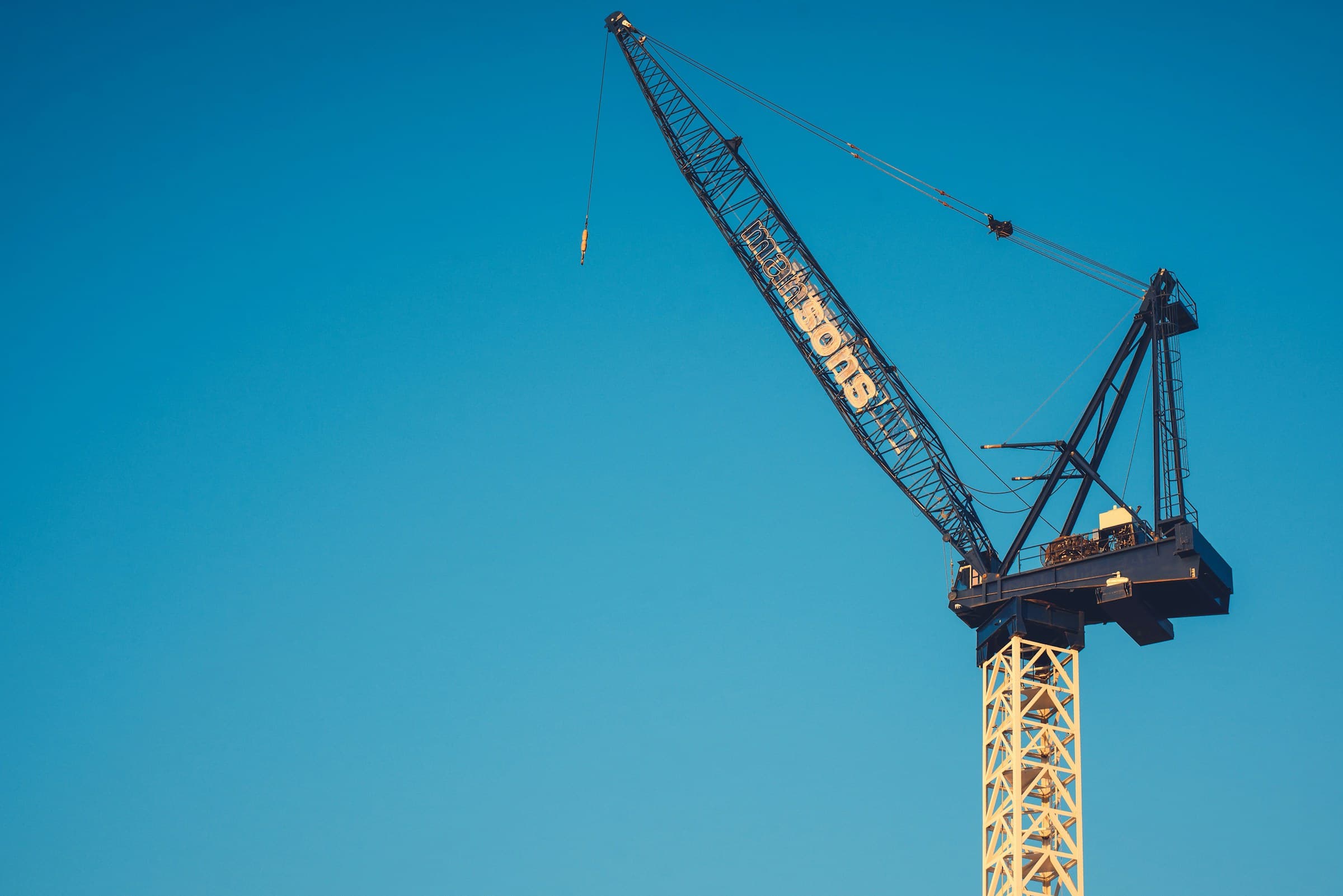
A hull block lands
to the millimetre.
A ship is built in blocks, and every mega-block has to land in the drydock to a millimetre — close enough for the seam to weld, level enough for the keel to be true. Lift it wrong and the alignment is off for the whole hull; drop it and the drydock slot, scarce and expensive, is lost. We engineer that lift — block weight + centre-of-gravity verified, alignment-tolerance set, sealed before the goliath swings. The yard builds the ship ; we get the block into place.
ASME B30.5
Mobile crane standard, methodology-grade
Z150
Quebec lift-plan code applied to every engagement
24 h
Emergency lift plans — Canadian shipyards
0
Block lifts without a sealed plan in hand
Six exposures in the drydock.
Shipyard lifts carry an exposure profile of their own : fabricated blocks with uncertain centre-of-gravity, alignment tolerances measured in millimetres, and a drydock slot that can't be re-scheduled. The exposures below are what the sealed lift plan exists to control. Every Maxor deliverable in this vertical addresses them explicitly.
Block alignment error
A hull block set even slightly out of position throws the seam alignment for the welders and propagates through the hull. The set geometry is engineered to the millimetre — the crane lands it on the marks, the fit-up crew doesn't fight it.
Uncertain centre-of-gravity
A fabricated mega-block's CoG isn't a clean spec — it shifts with outfitting. A mis-estimated CoG means an unbalanced pick that swings. We verify the CoG + rigging geometry before the lift, not by watching the block tilt on the hook.
Drydock-slot loss
Drydock capacity is scarce and booked far ahead. A dropped or stalled block lift doesn't just damage steel — it forfeits a drydock slot worth weeks of yard throughput. The lift plan keeps the dock on schedule.
Goliath + heavy-crane operation
Shipyard lifts run goliath gantry + large mobile cranes near their charts. Tip-over or block drop is a fatality-class event. Capacity utilization documented per pick ; tandem load-share engineered for the heaviest blocks.
Confined drydock geometry
Blocks are set into a dock dense with shoring, scaffolding, adjacent blocks, and services. Swing arc + clearance is plotted against the as-built dock ; CRANEbee 3D where the fit is tight.
Marine + launch exposure
Float-out + launch-prep lifts happen at the water's edge — tide, list, and trim in play. A dropped load into the dock basin is a Transport Canada event. The contingency matrix maps the marine exposure before the pick.
Six lift archetypes. Block to launch.
Shipyard lifts cluster into recurring engineering patterns from block-erection to float-out. Each archetype has its own load-case profile and alignment constraint. The methodology adapts ; the rigor doesn't.
Hull-block + mega-block erection
Fabricated hull blocks + grand-blocks lifted into the drydock and set to alignment tolerance. CoG-verified, tandem or goliath-crane for the heaviest. The signature shipbuilding lift. CRANEbee 3D mandatory.
Ship-module + superstructure installs
Deckhouses, superstructure blocks, accommodation + machinery modules. Set onto the hull to alignment tolerance, outfitting-laden CoG accounted for. Confined-dock swing engineered.
Engine, shaft + propeller lifts
Main engines, shaft lines, propellers, rudders, thrusters. Precision set on the centreline to a tight tolerance. Acceleration-controlled lift to protect the machinery; confined engine-room access.
Ship-repair + refit lifts
Component removal + replacement during repair + refit — engines, generators, hull sections, equipment. Lifts into a docked vessel around existing structure. Sequenced into the repair window.
Launch + float-out prep lifts
Final-outfitting lifts before launch, dock-gate + caisson handling, launch-cradle equipment. At the water's edge — tide + trim documented in the contingency matrix.
Multi-crane + tandem block lifts
The heaviest grand-blocks lifted by two or more cranes when no single crane has the capacity. Load-share per crane, sync sequence, level-pick coordination. Modeled in CRANEbee ; second engineer signs.
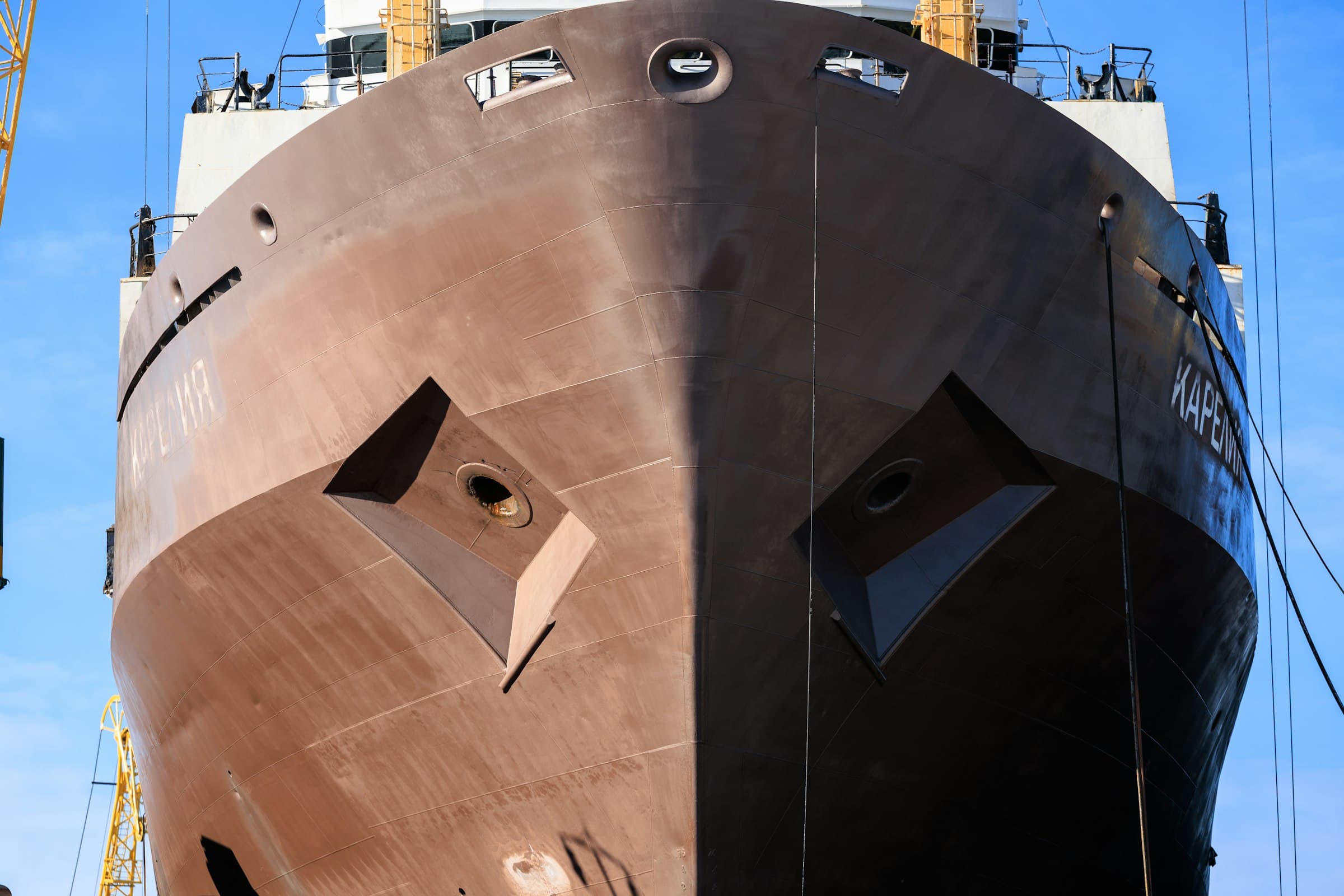
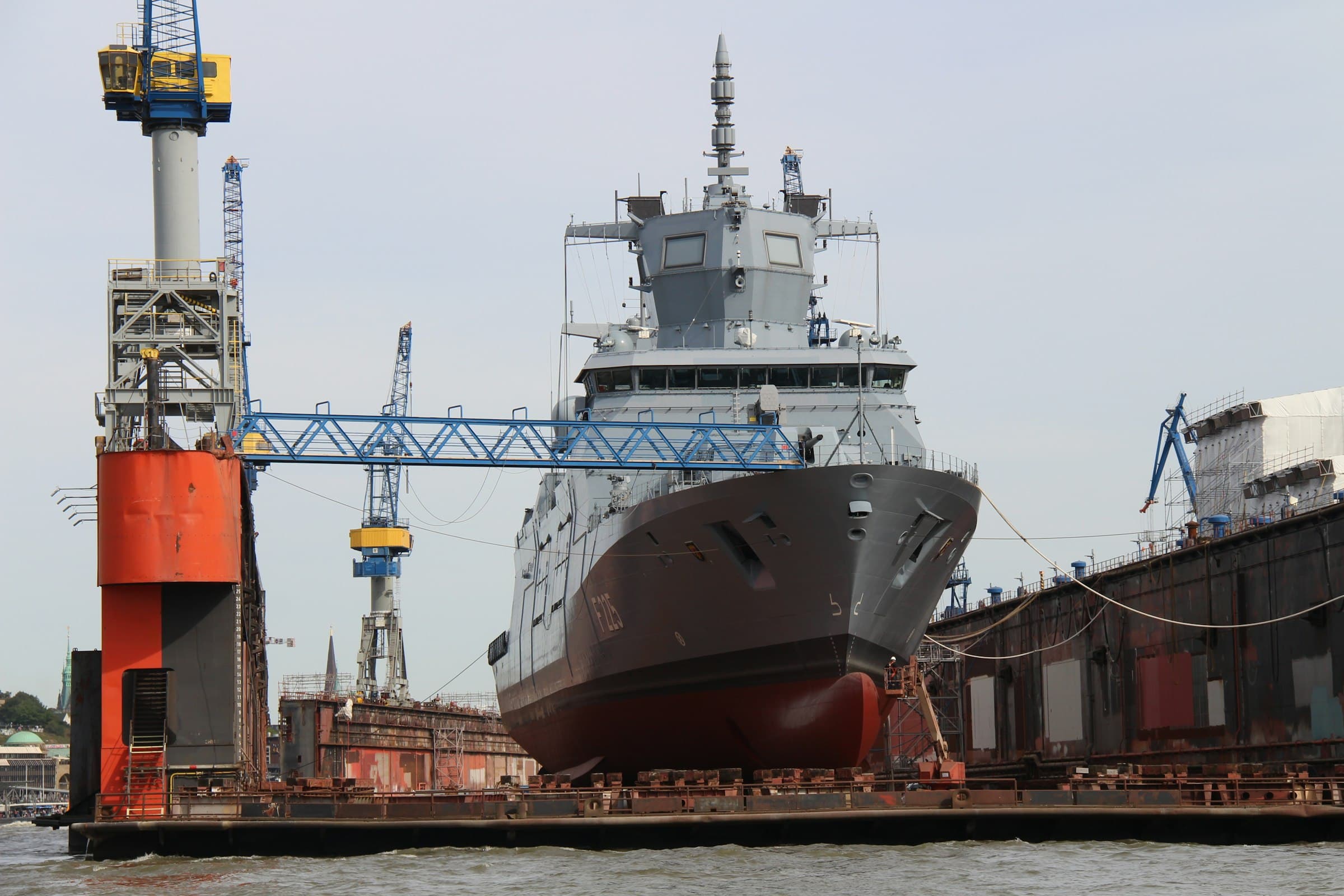
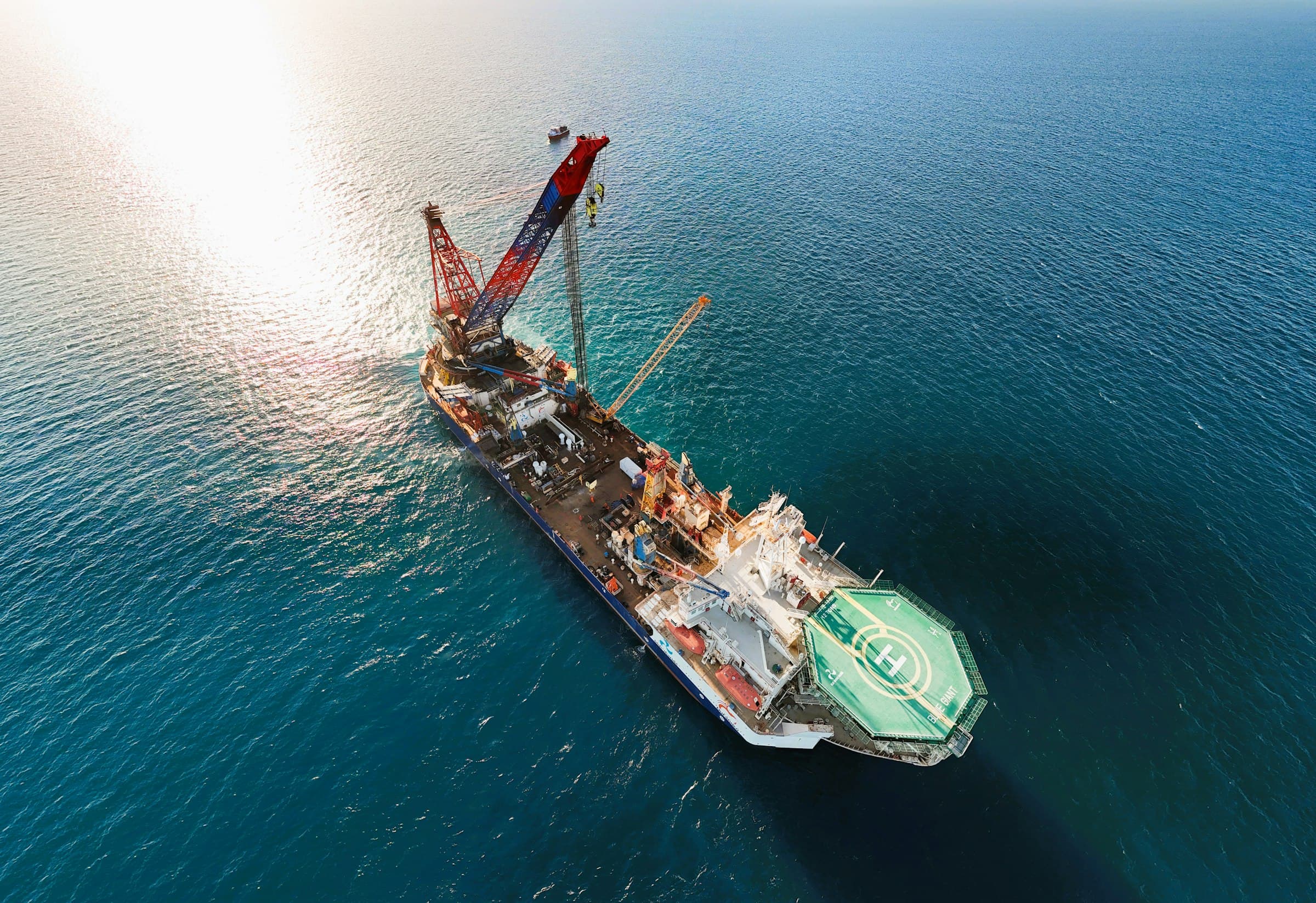
Shipbuilding in the field
From sector context to the lifts we engineer — a look at where this work happens.


The standards we work to.
The lift is our scope, so the standards we cite are crane + rigging standards. The naval architecture, the classification-society survey, the welding procedures belong to the yard + class society — we engineer getting their block into place, to alignment tolerance.
Mobile and locomotive cranes
The mobile crane safety standard — load charts, capacity, setup, operation. Cited on every shipyard lift plan as the methodology baseline, alongside goliath-gantry operating limits.
Mobile crane safety + Quebec lift-plan code
The Canadian mobile crane standard ; in Quebec, Norme Z150 is the provincial lift-plan code. Cited on every engagement in its jurisdiction.
Slings
Governs sling selection, rating, and inspection — wire-rope, chain, synthetic. Cited on the rigging spec of every lift, each leg sized against the block weight + safety factor.
Rigging hardware
Governs shackles, links, rings, and connecting hardware. Cited on the rigging assembly — every component rated to the load it carries, including block-lift lug attachments.
Crane operator qualification
The qualification + certification standard for mobile crane operators. Referenced in the operator-brief section so the right ticket runs the block pick.
Transport Canada Marine + manufacturer charts
Transport Canada Marine governs the yard's waterside environment ; every capacity figure in our plans traces to the manufacturer load chart. Both referenced on float-out + launch-prep lifts.
Four capability lines. One shipbuilding engagement.
Maxor's four service pillars all show up on a shipyard block lift. Here's how each one earns its place — block to launch.
Sealed plans + emergency response
Block-erection + module lifts, single-crane to multi-crane tandem, set to alignment tolerance. Same-day emergency tier when a lift conflict threatens a drydock slot. Capacity utilization per pick ; CoG verified ; Z150 / B30.5 cited inline.
Distribution + training + implementation
Mega-block erection, superstructure installs, and confined-dock lifts modeled in CRANEbee before the goliath swings. Swing arc + dock clearance drawn against actual geometry, alignment-tolerance set rehearsed. We distribute, train, and implement the platform on Canadian shipyard projects.
Distribution + advisory + training
Dyneema® synthetic chains for block + module handling — lighter rigging the crew handles faster in a confined dock, non-marking on finished hull coatings, non-conductive near energized outfitting. Authorized Quebec distribution.
Deterministic engineering platform
The Maxor software line (Heisen, TensorYard, HullSmith Firewall) provides the audit-grade evidence substrate behind the sealed lift plans — recallable lift + CoG records, block-erection-campaign provenance, sovereign deployment.
Beyond the four pillars — software built for your operation.
The four service pillars cover the lift. But most shipyards carry a software gap the off-the-shelf vendors never close. We build it — custom applications, integrations, and managed services, same engineering posture, same team from kickoff to go-live, sovereign by default. Engineered in Canada, owned by you.
Heisen — our deterministic intelligence layer — is optional on any build: embed it or not, your call. Either way it plugs into a fresh custom app or your existing third-party software via API.
Block-erection sequencing + drydock scheduling
Sequences hull-block erection against crane availability, drydock slots, and the build schedule — so blocks land in the planned order and the dock turns over on time.
Block-registry + CoG + lift digital twin
A registry of every block tied to its verified weight, centre-of-gravity, and sealed lift plan — recallable for sister-ships instead of re-engineered, the lift history auditable.
Production + outfitting progress dashboard
Tracks block fabrication + outfitting progress against the build plan — so the yard sees the critical path and the next lift is ready when the dock is.
Shipbuilding, answered
Yes — Maxor engineers sealed lift plans for shipbuilding and repair, including block and module erection, engine and superstructure placements, and dry-dock work. Every plan is peer-reviewed before issue.
Maxor works to ASME B30.5, CSA Z150 and Z150.3, and ASME B30.9 / B30.26, alongside Transport Canada Marine requirements and the crane's load charts. Every plan is peer-reviewed by a second engineer.
Yes — Maxor plans multi-crane block and module erection where sequencing, tandem picks, and yard congestion are the binding constraints, using CRANEbee 3D clash detection to validate the sequence before it runs.
Scope your shipyard block lift.
Tell us the block, the drydock, and the build schedule. A senior lead responds within one business day with a scoped lift engagement and a path to first deliverable.